Australian Online Casinos 2026: Real Deposit Tests and Clear Rankings
In brief
Casinova, Betwest and Kingmaker lead our shortlist of online casino options for Australian players after funded tests in June-July. We checked Anjouan/Curacao licences, modelled wagering, and timed cashouts. Prefer brands completing KYC cleanly and paying out in under 24-48h. Play in AUD where shown; crypto (BTC/ETH) is often the fastest post-approval rail. Betwest leads welcome value (A$7,500 + 350 FS) when listed.
Editorial window: Jun-Jul 2026 - Next review: October
Five AU-facing operators put through real A$ deposit and withdrawal tests
✓Real deposit tested✓Withdrawal timed post-KYC✓Licence status checked✓Payout terms read
Our Five Tested Australian Online Casinos
Kingmaker Casino
9.2/10
Bonus: A$750 + 50 Free Spins
Kingmaker Casino draws Australian players with swift PayID deposits and clean KYC flow that rarely drags past a single working day.
Once documents clear, card withdrawals land in three to five days while e-wallet cashouts reach accounts in under 24 hours, keeping the cashier experience smooth even when the local banks apply extra checks on overseas transfers.
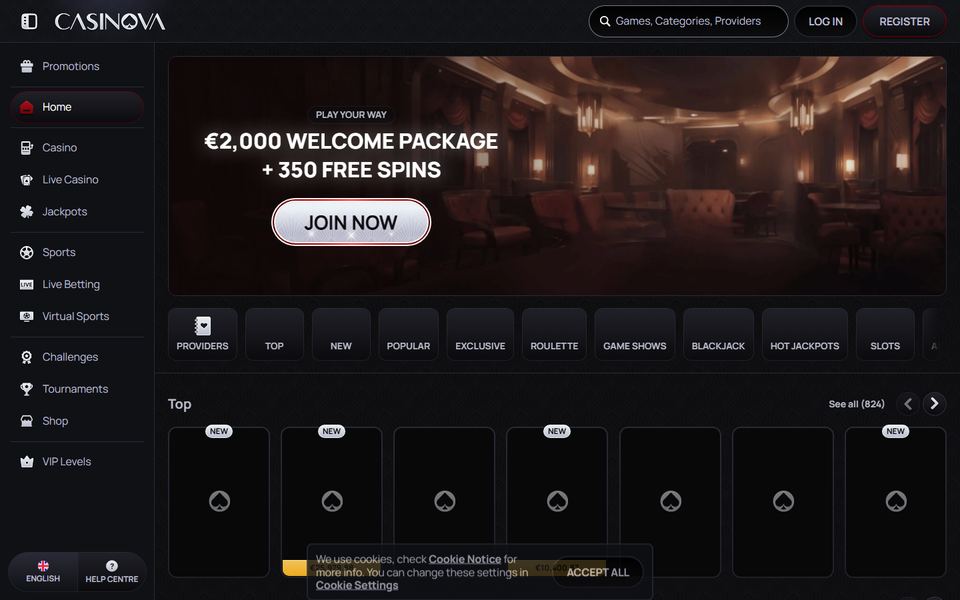
Casinova Casino’s four-stage package offers a concrete path to €2,000 plus 350 free spins.
Step one is 100 % up to €500 with 200 spins, followed by three 50 % or 75 % reloads capped at €500 each and carrying 50 or 100 spins. The largest bonus amount carries 40× wagering and limits single bets to €100, so a player chasing the full package must plan stake sizes accordingly.
Cleobetra Casino greets visitors with an Egyptian-themed lobby where golden columns frame the main reels.
The jackpot section is front and centre, feeding progressive pools that climb into six and seven figures, while Gold Saloon live tables sit just one click away for roulette and blackjack fans who want an authentic croupier experience without leaving the slot-heavy catalogue.
BetRepublic operates under an Anjouan licence, which Australian regulators do not recognise yet still permits offshore play.
The licence ensures basic dispute mediation, but players should be aware local ACMA blocks do not extend to this site, so access depends on current DNS work-arounds and the operator's continued willingness to accept AUD players.
BetWest supports PayID transfers that credit instantly and keeps its mobile site fully responsive on both iOS and Android.
The cashier lists familiar Australian options first, while the portrait layout lets punters switch between pokies and live tables without zooming or losing button placement, making the platform convenient for on-the-go sessions.
Cashout track record, bonus terms, and support — rated for five AU-facing operators
Kingmaker Casino
License Curaçao · 9.2/10
Pros
Generous welcome bonus offer
Extensive live casino section
Helpful customer support team
Cons
Curaçao licence (not licensed in Australia)
Withdrawals can take up to 24 hours
Casinova Casino
License Curaçao · 9.4/10
Pros
Fast payouts within 12 hours
Over 3,000 pokies and slots
Responsive 24/7 customer support
Cons
Curaçao licence (not licensed in Australia)
No dedicated mobile app
Cleobetra Casino
License Anjouan · 9.0/10
Pros
Eye-catching design and premium graphics
Over 2,500 pokies and slots
Recurring bonus promotions
Cons
Anjouan licence (not licensed in Australia)
No dedicated mobile app
Betrepublic Casino
License Anjouan · 9.1/10
Pros
Exceptionally high welcome bonus
Sports betting and casino combined
Wide live betting selection
Cons
Anjouan licence (not licensed in Australia)
Withdrawals can take up to 12 hours
Betwest Casino
License Offshore · 9.3/10
Pros
Welcome up to A$7,500 + 350 Free Spins
3,000+ games including live tables
Crypto payouts cleared in 0–24h
Cons
Offshore licence (not licensed in Australia)
KYC required before first withdrawal
What We Actually Tested
Each of these five Australian online casinos receives a real deposit of A$200+, a wagering model built from its terms, 10+ pokies plus one live-dealer hand, and a timed post-KYC cashout.
We rank real-money Australian Online Casinos by testing funded accounts, not demo lobbies — Casinova, Betwest and Kingmaker lead the current cycle. We clear or model wagering requirements, play 10+ pokies plus one live/table sample, then request a withdrawal after KYC.
At a glance: top picks
Three of the five Australian online casinos stand out this cycle: Casinova for games and support, Betwest for bonus residual value and Kingmaker for pokies depth.
Casinova - strongest mix this cycle of games and support.
Betwest - competitive cashout window after verification and a strong welcome package.
Kingmaker - usable live chat for AU-facing players and solid pokies depth.
Max bet clauses, game weighting and max cashout limits can shift weekly, so always check the live terms before claiming a bonus.
How We Score and Rate the Casinos We Test
Each casino we test receives one score built from six pillars: licence, bonus residual value, cashout time, game library, payment rails and responsible-gambling tools.
In full: (1) published offshore licence (Anjouan / Curacao), (2) residual bonus value after wagering, (3) cashout time after KYC, (4) pokies + live dealer coverage (Pragmatic Play, NetEnt, Play'n GO, Evolution-style tables), (5) payments (cards, e-wallets, crypto; PayID/POLi/BPAY/Neosurf when shown), (6) deposit limits and self-exclusion tools.
Australian players: the legal context
Under the Interactive Gambling Act 2001, as amended in 2017, it is an offence for an operator to offer online casino games to Australians without an Australian licence. The Act does not penalise players, but players get no local consumer protection.
ACMA enforces the Act and maintains a blocklist of illegal gambling sites, so access can be interrupted without notice. The brands here are offshore-licensed and hold no licence from any Australian state gaming regulator.
Cashouts and payments in AUD
The five casinos list Visa, Mastercard, Skrill, Neteller, BTC/ETH, Paysafecard and Neosurf — with PayID, POLi and BPAY at select brands for instant AUD transfers.
After approval, e-wallet withdrawals often land same-day, up to 24h; cards typically take 24-72 hours (Kingmaker 3-5 days). Complete KYC before large withdrawals so the timer starts clean.
How to judge a bonus after wagering
A casino bonus is worth only what remains after wagering: run the headline package through max-bet rules, excluded high-RTP titles and cashout caps before treating it as real value.
We rate packages near 35x as more playable than 50x+ packages, because tight max-bet rules make the higher requirement hard to clear. Free spins only help if they land on providers you actually play.
Safety: Licence, RNG, KYC
None of these five casinos holds an Australian licence. A safe Australian online casino shows a licence number in the footer, uses TLS on the cashier, requires KYC before the first cashout and offers working responsible-gambling tools.
Click every RNG certification seal a brand shows: a genuine seal opens a certificate naming the brand's current domain, while a copied seal does not. KYC requirements typically include a government-issued photo ID, a recent proof of address, and source-of-funds documentation for larger withdrawal requests. Completing KYC before your first withdrawal prevents delays; most brands require it once.
Responsible-gambling tools to look for: deposit limits, loss limits, session time reminders, and a self-exclusion option. If the cashier shows none of these, treat it as a gap in the operator's consumer-protection framework.
Responsible Gambling
Set deposit and loss limits before you play at any online casino. If gambling is causing harm, call Gambling Help Online 24/7 on 1800 858 858 or visit gamblinghelponline.org.au. 18+ only. T&Cs apply.
Gambling Help Online provides free, confidential counselling by phone and online chat, available around the clock. If you prefer text-based support, use the live-chat option on the website. BetStop, the national self-exclusion register managed by ACMA, allows Australians to exclude from all licensed Australian wagering services simultaneously — register at betstop.gov.au. It does not cover offshore casinos, so use each casino's own self-exclusion tools as well.
Offshore licences explained: Curacao and Anjouan
Casinos serving Australians hold licences from third-country issuers, not from an Australian authority, so consumer protections differ substantially from regulated markets.
Licence details are usually listed in the site footer.
Two jurisdictions dominate the AU-facing market: Curacao (through its Gaming Control Board) and Anjouan (through the Anjouan Offshore Finance Authority). Neither is equivalent to a licence issued by a regulated domestic authority. Understanding what they provide — and what they do not — is essential for Australian players choosing where to play.
A Curacao licence confirms that, at the time of application, the operator met a minimum set of requirements, among them payment of licensing fees and a registered business presence in the jurisdiction. Historically the framework has been lighter than its European equivalents. A 2023 reform process brought in the new Curacao Gaming Control Board and added mandatory RNG certification for licence holders plus stricter fit-and-proper requirements. Older legacy licences carry less weight in our scoring than brands whose licences were issued under the updated framework.
An Anjouan licence (Comoros Islands) is a newer jurisdiction entering the offshore market around 2022. An Anjouan licence applies lower barriers to entry than reformed Curacao licensing, which makes verification against the operator's registry more important. We check licence numbers in the footer against the issuing authority's registry directly. Cleobetra and Betrepublic in our table carry Anjouan credentials. Both have met our minimum test criteria in the June–July cycle.
How you verify a licence number yourself
You can check a casino footer licence yourself in three steps, instead of relying on a logo:
Find the licence number. Footer text is where it should appear, often beneath the responsible gambling logos. Typical forms include a digit string or a formatted code such as 8048/JAZ2022-000.
Visit the registry directly. For the Curacao jurisdiction, the Gaming Control Board maintains a public licence register. For Anjouan, ask the operator for the licence number and check it with the issuing authority. Do not follow links from within the site itself — verify independently.
Check the match. The domain you are visiting should correspond to the domain listed on the licence record. Operators sometimes display licence credentials belonging to a parent entity rather than the specific brand — a legitimate but less transparent practice we flag.
One additional check: the licence status. Some registries distinguish between active, suspended and expired licences. An expired licence number in the footer is not the same as an active licence. If the registry shows a status field, confirm the brand you are viewing is still actively covered. Operators in the middle of a licence renewal may have a short validity gap — this is worth noting, though not necessarily a disqualifier if renewal is confirmed.
Offshore licensing: what it does not provide
Offshore licences give players at these casinos no cross-operator self-exclusion register, no mandatory player fund segregation and no affordability checks — these protections apply only in regulated domestic markets.
Specifically:
Operators have no mandatory connection to a national self-exclusion register such as BetStop, which covers licensed Australian wagering services. Operators may offer voluntary self-exclusion tools, but these are brand-specific rather than cross-operator.
Dispute resolution pathways are limited to those provided by the offshore jurisdiction. For Curacao, this means the brand's appointed dispute resolution entity; for Anjouan, mechanisms are less formalised. Neither framework provides access to a statutory ombudsman of the kind available in regulated domestic markets.
Maximum loss limit requirements, mandatory affordability checks and advertising restrictions applying in European regulated markets do not extend to these offshore operators in Australia.
We disclose these gaps because informed players are better protected than those who assume offshore-licensed operators carry equivalent obligations to regulated domestic operators.
Australian players and complaint pathways
Australian players with a complaint about a casino escalate in three steps: the brand's ADR provider first (check the T&Cs), forum pressure second and a Visa/Mastercard chargeback third; ACMA handles illegal advertising only.
State gambling regulators (such as the Victorian Gambling and Casino Control Commission) similarly have no jurisdiction over these offshore operators.
Practical escalation options include the brand's designated alternative dispute resolution provider (listed in the T&Cs if one exists), player forum communities creating reputational pressure on operators, and where payment disputes arise, chargeback procedures through card issuers or e-wallet providers. We record dispute resolution mechanisms for each brand during our test cycle and weight their existence positively in the scoring rubric.
For payment disputes, the key question is whether the transaction meets your card scheme's chargeback criteria. Visa and Mastercard both maintain rules around goods and services not received; an offshore deposit that results in withheld winnings without explanation may qualify. Contact your Australian bank's dispute team directly — they can advise on eligibility and initiate the process. Keep records of deposit receipts, bonus T&Cs screenshots and any correspondence with the operator's support team.
How our overall score uses licence strength
For every casino, licence quality carries roughly 15% of the total score — one weighted pillar among six.
A brand with a weaker licence jurisdiction can still rank highly if the cashout reliability, bonus modelling and support quality are strong. Conversely, a prestige licence on a brand delaying cashouts without justification does not protect overall ranking. The weight reflects the reality Australian players currently cannot access fully regulated domestic operators for online games.
What changed for players in Curacao licensing reform
The 2023 reform replaced sub-licences with individual direct licences from the Gaming Control Board, and fit-and-proper checks and player fund reserves became mandatory for these casinos.
Offshore rules changed in 2023.
In 2023, Curacao introduced the new Curacao Gaming Control Board (CGCB) to replace the older master-licence sub-licence structure. Under the previous system, a single master licence holder could sub-license brands with limited oversight per brand. The reformed framework requires each operator to hold an individual licence directly from the CGCB, submit to a fit-and-proper assessment of directors and shareholders, and maintain financial safeguards including a player fund reserve. The practical impact for AU players is brands licensed under the reformed framework carry higher accountability than those operating on legacy sub-licences. The transition period was ongoing at our test date; at the time of testing, Casinova and Kingmaker carried Curacao credentials — we note in each review card whether the licence is under the reformed or legacy framework where this information is disclosed in the footer.
What offshore licences provide for player fund protection
Neither framework requires a casino to segregate player funds, and no compensation scheme applies, so Australian player balances carry insolvency risk.
Regulated domestic markets typically require operators to hold player funds in segregated accounts or to buy insurance to cover player balances in the event of insolvency. No equivalent requirement applies under either offshore licensing framework to the same mandatory standard. The reformed Curacao regime introduces a player fund reserve requirement, but enforcement and verification of the reserve is still maturing. In the unlikely event an offshore operator becomes insolvent, Australian player account balances may not be recoverable as a priority claim. For this reason, we recommend against maintaining large unutilised balances in any offshore account — withdraw winnings promptly rather than accumulating a balance.
When internal resolution fails: dispute escalation
When a casino does not resolve a complaint internally, its ADR provider is the first formal route, forum pressure is second and a card chargeback is third, because Australian regulators have no jurisdiction over offshore operators.
Where a dispute with an offshore brand cannot be resolved through the internal process, the escalation pathways available to Australian players are limited but not zero. Some offshore-licensed brands designate a third-party alternative dispute resolution (ADR) provider in their T&Cs; if listed, that provider is the first formal escalation route. Forum-based reputational escalation through AU player communities creates genuine commercial pressure on operators. For payment disputes specifically, card chargebacks through your Australian bank remain available where the dispute meets the card scheme's criteria, though some operators respond to chargebacks by closing the account and blacklisting the payment method across their platform.
Payment methods the five tested Australian online casinos accept and pay out on
Each casino in our comparison accepts cards, e-wallets, crypto and prepaid options — Visa, Mastercard, Skrill, Neteller, Bitcoin, Ethereum and Neosurf — and PayID, POLi and BPAY are available only at select brands.
VisaMastercardSkrillNetellerBitcoinEthereumPaysafecard / NeosurfBank / POLi / BPAY*
Deposit minimums and daily cashout limits at five tested Australian online casinos
Payment
Deposit min.
Typical max. withdrawal
Card
10-20 AUD
Daily A$5,000
Skrill, Neteller
10 AUD
A$10,000 per day
BTC/ETH crypto
Equiv. A$20
Unlimited / often high
Neosurf, Paysafecard
10 AUD
Deposit-only, often
Every test was cleared by three operators — this is how they earned it.
Shortlist these five casinos by withdrawal speed using the table, then read the licence notes, and deposit only money you can genuinely afford to lose.
Australian iGaming Writer · Compliance checks and A$ deposit testing
Last updated: 23 July 2026
Runs funded reviews for Australian Online Casinos: real A$ deposits, wagering checks, timed cashouts and licence verification focused on AU-facing brands.
Our testing process: Deposit of A$200+, 10+ pokies, a live/table sample, KYC, cashout timed. Scoring covers licence, residual bonus value, speed of payout, games, support, RG tools.
Via some links, we may earn a commission — affiliate disclosure. Ratings stay untouched by commissions.
Kingmaker listed a withdrawal window of 0–24 hours; mine landed at 6. That review stayed honest rather than optimistic — a solid basis for comparing a short list.
Ross D.
21 Jul 2026
I have not found cleaner explanations of wagering requirements anywhere else. Using this page's criteria, comparing three casinos took under 10 minutes.
Leah T.
20 Jul 2026
It is useful that they show which brands take POLi vs PayID vs crypto. That spared me signing up with an operator missing my bank's instant transfer.
What Australian Casino Players Ask Most
These questions set out what a listed operator must provide: a verifiable offshore licence, a recorded funded cashout, published wagering terms, and working RG tools.
What are the best australian online casinos right now?
Casinova, Betwest and Kingmaker lead our current shortlist after funded A$ tests, licence checks and timed withdrawals. Rankings change when cashout performance or terms degrade. We re-test the shortlisted operators each quarter with the same funded deposit, KYC and cashout protocol, always withdrawing to the same payment rail, so positions reflect tested results rather than welcome offers or commission structures.
Are Australian online casinos legal?
Playing is not a criminal offence for Australians, but the Interactive Gambling Act 2001 prohibits operators from offering online casino games to Australians without an Australian licence. The casinos listed here hold offshore licences (Anjouan, Curacao). Report illegal promotion through ACMA.
For Aussie players, which casino pays out fastest?
Crypto is usually the fastest rail after approval, and brands that advertised 0-24h windows performed best in our tests, while cards and e-wallets often take longer. Finish identity checks first, always.
What should Australians use as payment methods?
Cards, Skrill/Neteller as well, crypto and prepaid (Neosurf/Paysafecard) remain common. When the cashier lists PayID/POLi/BPAY, use them for clean AUD deposits. Test the rail by starting small.
How are casinos tested?
Funded deposit of A$200+, a bonus/wagering review, and 10+ pokies, live/table sample, KYC, a timed withdrawal, support, RG-tool checks. The rank is never set by marketing claims alone.
We use technical cookies to ensure the website works properly. By continuing to browse, you accept the use of cookies.